5-minute yoga practice before Mindfulness meditation Techniques (for those whose body prevents them from concentrating on anything other than physical sensations). “What’s more important: physical stability or mental peace?” Science has proven that consciousness isn’t limited to the brain; it extends throughout the body. Therefore, the only way to achieve both stability and relaxation is to unite body and mind. Yoga practice prepares our physical body for sitting, while Meditation Techniques brings our soul and mind to relative calm.
The idea of unity is central to both hatha yoga and meditation practice. Yoga (from Sanskrit yuj – attachment, connection) signifies the union of absolute opposites: the masculine and feminine principles, the consciousness of each individual and the Supreme Mind, inner contemplation and the expression of awareness of the external world, steadiness and relaxation. We believe that yoga can balance our mind and body. But how can we find this balance during meditation techniques, when the body is so uncomfortable that instead of following the flow of thoughts, we are completely focused on the pain in our back or knees?
Dharma practitioners know that everything passes, but sometimes emotional and physical distractions—thought processes, current life situations, digestive issues—get stuck in the body and lead to certain blockages.
Yoga practice includes various Yoga poses—asanas Poses (from Sanskrit meaning “sitting position” or “place for sitting”)—that are designed to promote proper breathing, improve circulation and hormonal regulation, and release toxins accumulated in the body as a result of poor diet, stress, or inactivity. Asana practice also allows us to work with our emotions: the body changes positions, and with it, our feelings change. Inhaling and exhaling, cutting the air with the arms and legs, moving into inversions, releasing thoughts and returning to our breath—yoga practice helps us stay in the flow of both body and mind.
This set of Meditation exercises is specially designed for meditators. The following asanas will strengthen your back and abdominal muscles, develop flexibility in your shoulders and hips, stimulate your internal organs, and help increase lung capacity and strengthen your cardiovascular system. This set of exercises takes a maximum of 5 minutes and can be performed before or after meditation practice (after meditation, it facilitates a smooth, conscious return to the outside world). No preliminary warm-up exercises are necessary, as the practice itself serves as a warm-up. After a long period of sitting, the set of exercises will re-energize your prana—your vital energy. Hold each pose for 3-5 breaths, with the exception of the cow and cat poses.
Set of Meditation exercises (Poses)
1) Goasana (Table Pose)
Make sure your wrists are directly under your shoulders and your knees are perpendicular to your pelvis. As you inhale, arch your belly toward the floor, lifting your sitting bones, chest, and head upward. Feel the stretch in your spine. Repeat this position as many times as you feel necessary before moving on to cat pose.
2) Marjariasana (Cat Pose)
As you exhale, lower your head down and tuck your tailbone under, drawing your belly toward your spine, arching your back like a cat. Feel your back muscles relax. Repeat this pose as many times as you feel necessary. The tabletop cat pose, or “dynamic cat pose,” helps develop spinal flexibility.
3) Balasana (Child’s Pose)
Place your knees hip-width apart. Sit on your heels, pressing your pelvis firmly against your thighs. Gently lower your body forward, extending your arms on the floor in front of you. Rest your head between your arms. This position calms the mind, massages the abdominal organs and calves, develops hip flexibility, and relieves tension in the lower back.
4) Lateral bend with extension
Return to a sitting position, keeping your back straight and spine stacked. Lower yourself onto your left hip. Reach up with your left hand and place your right hand on the floor. As you breathe deeply, you will feel your chest open and your left side lengthen. If you feel yourself falling to the left side, place a pillow under your left hip. Return to the center position, then repeat on the right side.
5) Navasana (Boat Pose)
Stretch your legs out in front of you, then, keeping your back straight and balancing on your sit bones, bend your knees and lift them up. You can use your hands to help you, either grasping your thighs or extending them alongside your body. If possible, try to tense your legs by pointing your toes upward. This is a basic exercise that helps strengthen your back for long (or, for now, short 10-minute) sitting positions.
6) Purvottanasana (Inverted Plank Pose)
With your knees directly over your ankles and your shoulders over your wrists, push your body up off the floor. Make sure your back is in a straight line. Don’t squeeze your glutes; your leg muscles should support you. This pose strengthens the back, wrists, arms, and legs, improves shoulder flexibility, and stretches the quadriceps, the large muscle in the front of the thigh.
7) Twists
Sit up straight and inhale, stretching your spine upward. As you exhale, twist your body to the right side, placing your right hand behind your back and grasping your right knee with your left hand. Release the pose and repeat on the left side, switching hands. This is one of the most beneficial poses: it massages the internal organs for improved digestion, strengthens the back muscles, and relieves pain in the spine, neck, and head.
8) Ardha Kurmasana (Half Turtle Pose) Variation
Place your feet together in butterfly pose (or “bound angle pose” – badhakonasana) and extend them about half a meter (2.5 feet) outward, forming a diamond shape. Grasp your feet with your hands and, as you exhale, gently bend forward, reaching the crown of your head toward your feet. Take your time and don’t worry about the depth of the bend; focus on your inhalations and exhalations. Observe how your body opens. If you practice this pose mindfully, you’ll eventually notice that you can easily touch your chin to your feet.
9) Opening the shoulder joints
Slowly, with your back rounded, come out of the previous pose and assume a comfortable cross-legged position. Place a pillow under your buttocks if you feel any discomfort in your sit bones. It’s important to keep your lower body firmly planted on the floor. Reach upward with your arms, lifting your ribs while keeping your pelvis firmly planted on the floor. Feel the stretch throughout your body.
10) Sitting position with a straight back
Then slowly lower your arms, feeling them flow downwards. Stretch the crown of your head upwards, placing your palms on your knees. Take a deep breath and exhale calmly.
Last Update: March 20, 2026
#About Author#
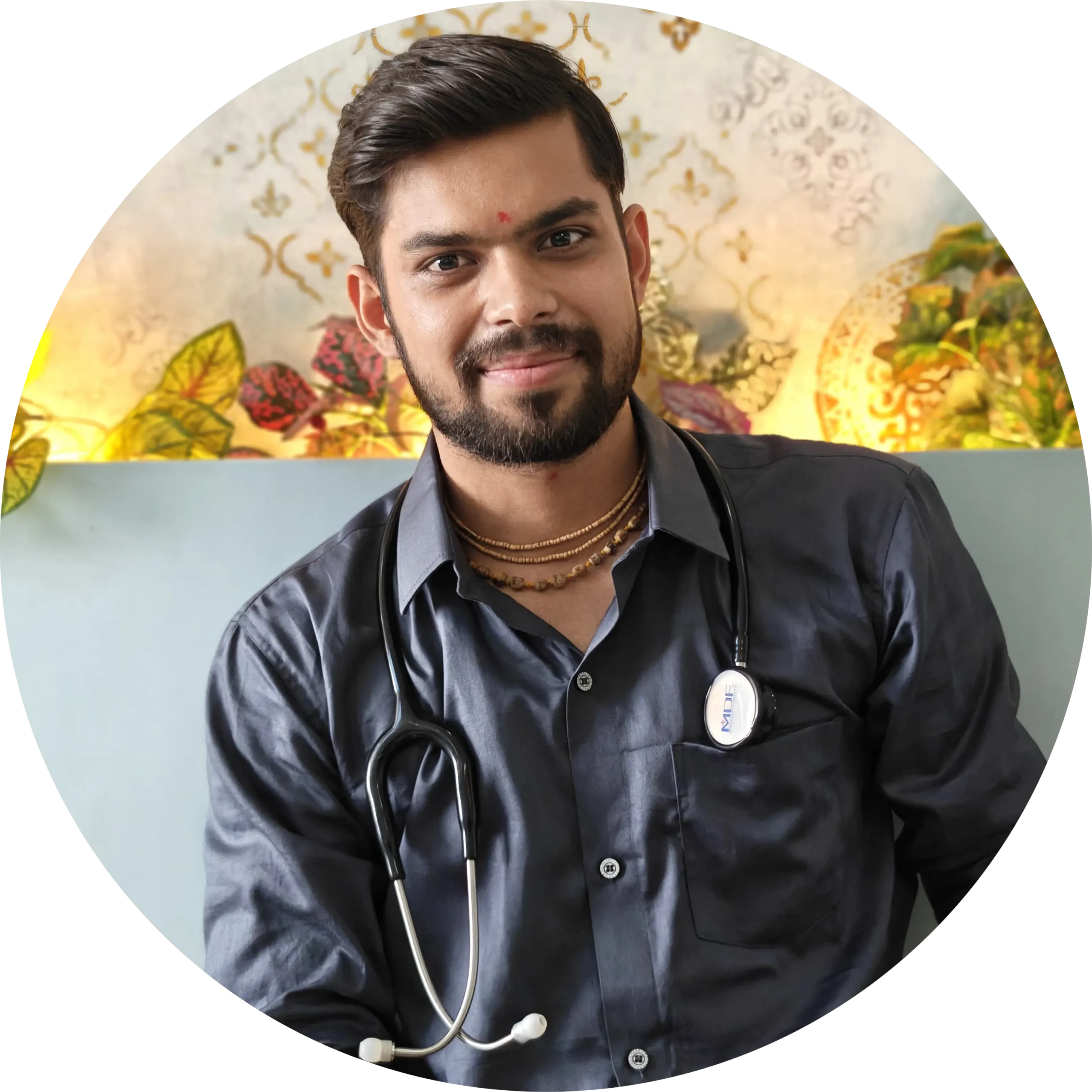 Written by Dr. Ashish Sharma, MBBS.MBBS graduate (Karaganda Medical University) and FMGE-qualified physician with completed internship at Rajeev Gandhi Government General Hospital, Alwar.
Disclaimer: This article is intended for general educational and awareness purposes only and does not constitute medical advice, diagnosis, or treatment. Please consult a qualified healthcare professional for medical concerns.