Start your day with sun salutation (Surya Namaskar) and recharge your batteries with 12 Powerful yoga poses of Surya Namaskar which should be done in the early morning on empty stomach. Practice of Surya Namaskar Steps awakens not only the body, but also the spirit and mind, reconnecting us with the cosmic energy which is expressed in each asanas and poses which also gives positive impact to the body and mind.
There are 12 Yoga Poses of the Sun Salutation (surya namaskara) adn each round consist of two sets. When we raise our arms up and then bend forward, we pay homage to the earth, the heavens, and all that exists between them, accompanied by a cycle of breath. As we lower our bodies, we connect with the earth. As we rise, we again extend our arms toward the sky. And when we join our palms in front of our chest in namaste, we draw a piece of the sky into our heart and breath, thus signifying that our body is the central point between heaven and earth.
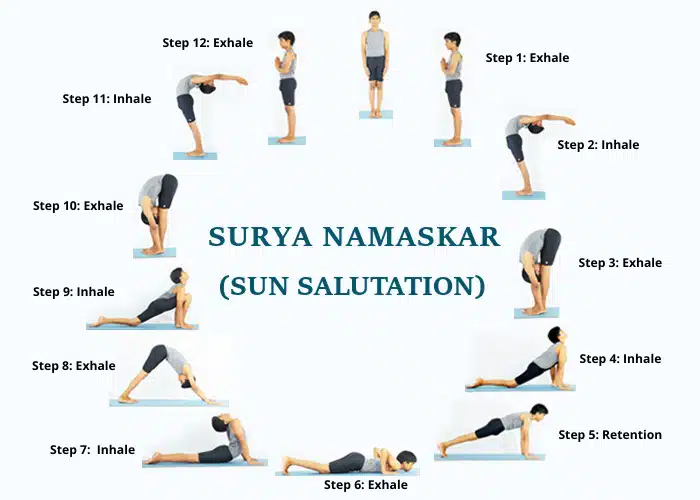
While not all teachers teach the Sun Salutation Poses in such depth (many yoga studios around the world use this practice as a warm-up, balancing the breath, body, and mind), it is a very powerful tool for restoring both our physical and mental well-being.
Table of Contents
The Origin and The Meaning of Surya Namaskar
Surya Namaskar Yoga is translated from Sanskrit as “sun salutation (surya namaskars),” Here “salutation” completely represents the profound essence of the Sanskrit word “namaskar.” “Namaskar,” in contrast, means “to bow, to show respect with one’s whole being.” This definition is clearly evident in the movements, as we stretch our arms upward, bow to the sun. After completing this sequence, we experience a remarkable sensation of vital energy filling the body.
Surya Namaskar embodies the spirit of Western yoga well: it’s a fairly intense physical exercise that also includes a spiritual component. And like much of modern yoga, it reflects both ancient ideas and contemporary innovations. However, to infuse the life-giving energy of the sun and the divine into your personal practice, it’s essential to understand the history and significance of this practice.
In the Vedic tradition, which predates classical yoga Poses by several thousand years, the sun was revered as a symbol of the divine, reciting mantras to it at dawn. The entire practice included 132 verses and took over an hour. After reciting each verse, the practitioner prostrated himself facing the earth in the direction of sunrise, thereby showing respect to the celestial body.
In both Vedic culture and yoga, the sun and the divine are inseparably linked. However, the origin of Surya Namaskar in modern Hatha Yoga remains unclear, as there is no information about it in traditional yogic texts.
So where did this popular complex come from? The oldest known yoga text describing Surya Namaskar is the Yoga Makaranda (T. Krishnamacharya, 1934). It is unknown whether Krishnamacharya learned this practice from his teacher Ramamohana Brahmachari, from other sources, or invented it himself. This is the name some give to the earlier text Vyayama Dipika (or “Light on Exercises”), which describes various gymnastic exercises for Indian wrestlers, some of which clearly resemble exercises from Krishnamacharya’s version of Surya Namaskar.
Accordingly, Krishnamacharya’s practice incorporated both gymnastic exercises and a spiritual component, where a focus on breathing and attitude distinguishes the practice from simple physical exercises. Whether based on Vedic mantras or a sequence of exercises, the essence remains the same: we welcome the divine principle in the symbol of the sun. As a source of light, it illuminates our clouded minds, and as a source of vitality, it frees us from illness.
Krishnamacharya is known to have passed on this teaching to his students, including K. Pattabi Jois (founder of the Ashtanga Vinyasa movement), B.K.S. Iyengar (founder of Iyengar Yoga), and Indra Devi (known as the first Western female yoga teacher). These individuals, having become renowned teachers, spread this knowledge throughout the world. Thus, the Sun Salutation became an important component of modern yoga.
12 Powerfull Surya Namaskar Steps and Mantra
Step 1. Prayer pose (Pranamasana)
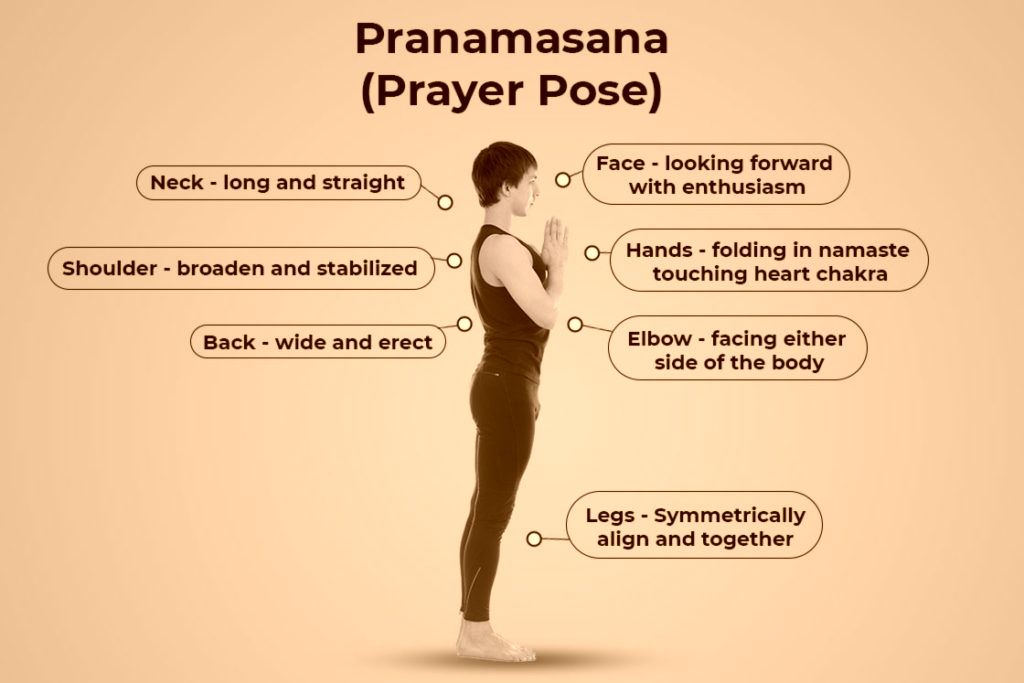
- Technique: Stand straight → feet together → weight equal → palms press at chest → neck straight (prayer position)
- Breathing Style: Slow normal breathing (start steady rhythm)
- Mantra: Om Mitraya Namah (ॐ मित्राय नमः)
- Key point: Body stable before moving
Step 2. Raised arms pose (Hasta uttanasana)
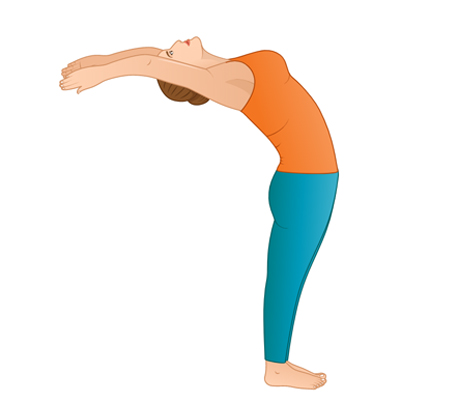
- Technique: Raise arms forward → overhead → Stretch upward first → Then slight backbend from upper back (avoid collapsing lower back)
- Breathing Style: Deep inhale while lifting + stretching
- Mantra: Om Ravaye Namah (ॐ रवये नमः)
- Key point: Stretch up > then bend
Step 3. Standing forward bend (Hastapadasana/Padahastasana)

- Technique: Hinge from hips (not waist) → Keep spine long initially → Then relax down → hands beside feet → Knees slightly bent if needed
- Breathing Style: Complete exhale while bending down
- Mantra: Om Suryaya Namah (ॐ सूर्याय नमः)
- Key point: Don’t force head to knees
Step 4. Equestrian pose (Ashwa Sanchalanasana) – Right leg back
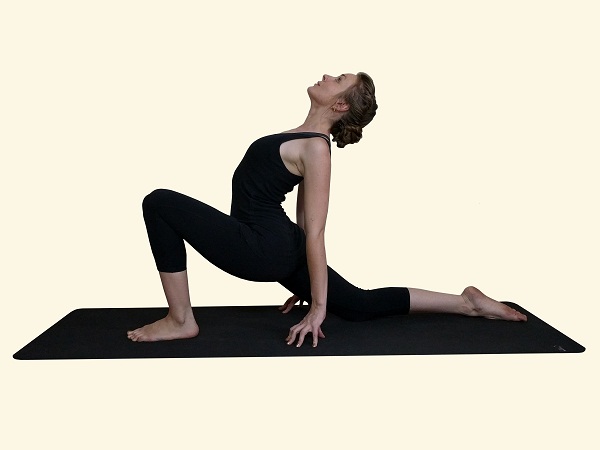
- Technique: Left foot stays between hands → Right leg straight back → Drop right knee if beginner → Chest open, look forward/up
- Breathing Style: Inhale while stepping leg back + opening chest
- Mantra: Om Bhanave Namah (ॐ भानवे नमः)
- Key point: Front knee above ankle
Step 5. Stick pose/Plank Pose (Dandasana)

- Technique: Take left leg back → Body straight line (head–heels) → Core tight, no sagging hips →
- Breathing Style: Hold briefly or slow neutral breath
- Mantra: Om Khagaya Namah (ॐ खगाय नमः)
- Key point: Shoulders exactly above wrists
Step 6. Salute with eight parts or points (Ashtanga Namaskara)

- Technique: Knees down → Chest and chin down (hips slightly up) → 8 points touch: feet, knees, chest, chin, hands
- Breathing Style: Exhale fully while lowering
- Mantra: Om Pushne Namah (ॐ पूष्णे नमः)
- Key point: Elbows close to body
Step 7. Cobra pose (Bhujangasana)
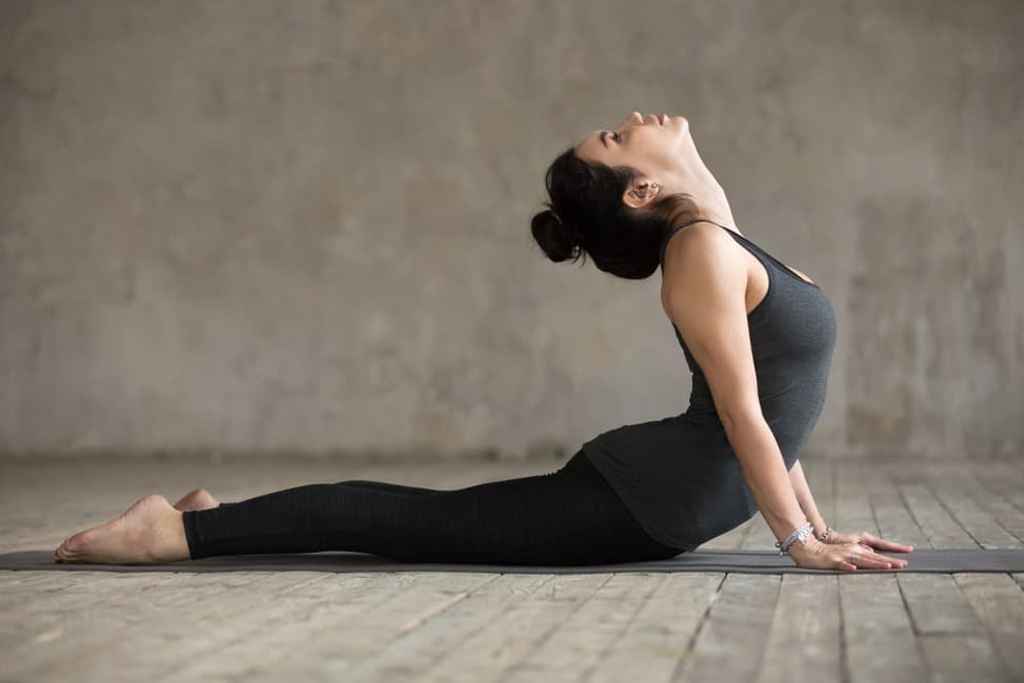
- Technique: Slide forward → Press palms lightly → Lift chest using back muscles (not just arms) → Shoulders down, elbows soft
- Breathing Style: Deep inhale while lifting chest
- Mantra: Om Hiranyagarbhaya Namah (ॐ हिरण्यगर्भाय नमः)
- Key point: Navel may stay near floor (don’t overextend)
Step 8. Downward facing dog pose (Adho Mukha Svanasana/Parvatasana)
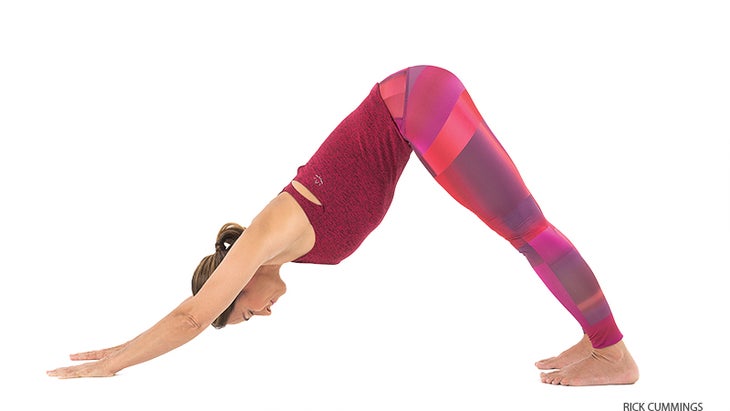
- Technique: Lift hips up and back → Form inverted “V” → Press heels toward floor → Head relaxed between arms
- Breathing Style: Full exhale while pushing hips up
- Mantra: Om Marichaye Namah (ॐ मरीचये नमः)
- Key point: Lengthen spine, not just push heels
Step 9. Equestrian pose (Ashwa Sanchalanasana) – Left leg forward
- Technique: Bring left leg forward between hands → Right leg back → Chest open, gaze forward/up
- Breathing Style: Inhale while stepping forward + lifting chest
- Mantra: Om Adityaya Namah (ॐ आदित्याय नमः)
- Key point: Smooth controlled step (not jerky)
Step 10. Standing forward bend (Hastapadasana )
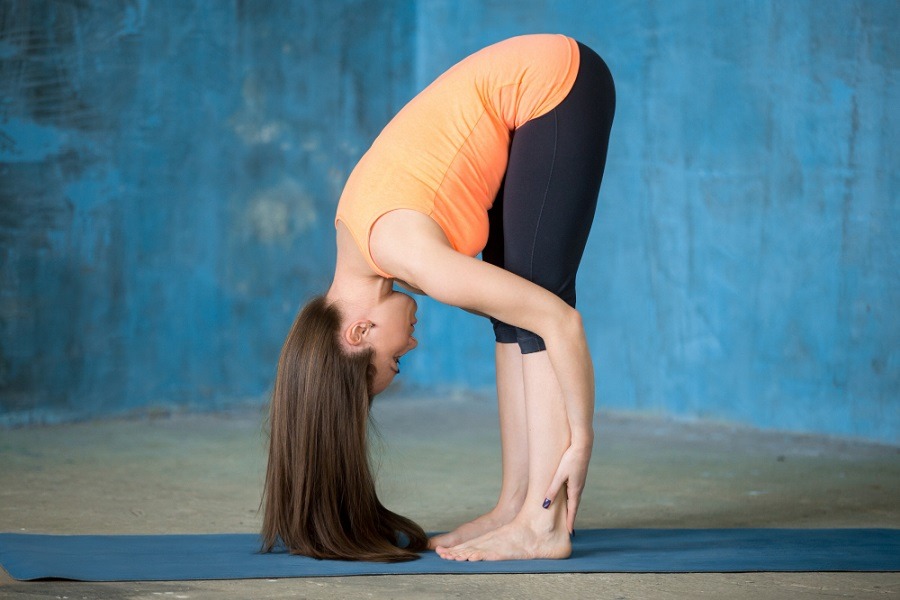
- Technique: Bring right foot forward → Fold deeply from hips → Relax neck
- Breathing Style: Exhale completely while folding
- Mantra: Om Savitre Namah (ॐ सवित्रे नमः)
- Key point: Let gravity pull you down
Step 11. Raised arms pose (Hasta uttanasana)
- Technique: Rise up with straight spine → Arms overhead → Gentle backbend
- Breathing Style: Inhale while lifting + stretching up
- Mantra: Om Arkaya Namah (ॐ अर्काय नमः)
- Key point: Lift first, then bend
Step 12. Mountain Pose (Tadasana )

- Technique: Return to standing → palms together → relax
- Breathing Style: Exhale and normalize breath
- Mantra: Om Bhaskaraya Namah (ॐ भास्कराय नमः)
- Key point: Complete the cycle calmly
Breathing and mantra are the basis of Surya Namaskar
To fully experience the results of the practice, it is recommended to focus on 4 points:
- Let your breath guide your movements. Each inhalation and exhalation should draw you into the next pose, not be a memorized sequence associated with a particular asana.
- Try to understand the meaning of the practice and feel sincere gratitude towards the rising sun. Just think: all life on Earth depends on the Sun. If we sense the life-giving force we receive with every movement directed towards the Sun, this will help us perform each asana in the sequence more consciously.
- Add mantras to your movements, as they can truly enhance the spiritual aspect of Surya Namaskar. The Gayatri Mantra, a Vedic mantra praising the Sun as a divine creation, is commonly used, but any other sacred sound, such as Om, can be chanted on the exhale.
- Try practicing this sequence outdoors on a sunny day at least once. At dawn, when the sun’s rays illuminate your body, a new experience is guaranteed.
Benefits of Surya Namaskar
Physical Benefits
- Full body workout
- Improves flexibility
- Builds strength
- Better posture: aligns spine and body balance
- Boosts stamina: acts like cardio
Internal / Health Benefits
- Improves digestion: stimulates abdominal organs
- Enhances blood circulation: better oxygen supply to body
- Supports heart health: rhythmic movement improves cardiovascular function
- Hormonal balance: helps regulate endocrine system
- Weight management: burns calories, supports fat loss
Mental Benefits
- Reduces stress & anxiety: synchronized breathing calms nervous system
- Improves focus: mind–body coordination
- Boosts mood: increases energy and mental clarity
Other Important Benefits
- Better breathing capacity: deep inhalation–exhalation training
- Detox effect: sweating + improved circulation
- Improves sleep quality
- Increases overall energy levels
Perform Surya Namaskar in the morning
Although this complex can be performed at any time of day, the best time for it, and for yoga and meditation in general, is early morning in empty stomach. Ayurveda recommends waking up during this time. It is believed that our mind is most calm and clear then.
For many of us, early morning is a time when we can be alone, without distractions or demands. By rising early, we give ourselves the opportunity to experience this inner silence and channel our energy into higher endeavors throughout the day. An extra hour or two of sleep can’t compare to the energy of sunrise.
Surya Namaskar is an ideal morning practice (infront of rising sun) that will awaken the body, focus the mind, and instill a sense of gratitude throughout the day. If you can’t practice before sunrise, you can experience similar emotions by performing the following simple ritual immediately after waking: prepare for the practice by feeling gratitude toward the divine light, face the rising sun, and bow toward it.
And, by the way, even during long, gloomy winters you can see the sun, the main thing is to feel its light in your heart.
FAQs about Surya Namaskar
How many rounds should beginners do?
Start with 4–6 rounds, then gradually increase to 10–12 rounds
What is the best time to do it?
Early morning, empty stomach is ideal. Evening is okay if stomach is light.
Can it help in weight loss?
faster rounds burn calories and support fat loss when done regularly.
Is it enough as a full workout?
For general fitness, yes. For muscle building, combine with strength training.
Can beginners do it easily?
Yes, but start slow, focus on correct posture and breathing.
Should breathing be strict or flexible?
Follow the pattern (inhale open, exhale fold), but don’t stress—flow matters more.
Can I do it during periods?
Light practice is okay if comfortable; avoid intense or fast rounds.
Is it safe for back pain?
Mild back pain may improve, but avoid deep bends if pain is severe.
How many calories does it burn?
Approx 10–14 calories per round (depends on speed, weight, intensity).
Do I need to chant mantras?
Optional. It helps focus, but not necessary for physical benefits.
What are the 12 asanas of Surya Namaskar?
Prayer pose (Pranamasana)
Step 2. Raised arms pose (Hasta-uttanasana)
Step 3. Standing forward bend (Hastapadasana/Padahastasana)
Step 4. Equestrian pose (Ashwa Sanchalanasana) – Right leg back
Step 5. Stick pose/Plank (Dandasana)
Step 6. Salute with eight parts or points (Ashtanga Namaskara)
Step 7. Cobra pose (Bhujangasana)
Step 8. Downward facing dog pose (Adho Mukha Svanasana/Parvatasana)
Step 9. Equestrian pose (Ashwa Sanchalanasana) – Left leg forward
Step 10. Standing forward bend (Hastapadasana )
Step 11. Raised arms pose (Hasta-uttanasana)
Step 12. Mountain Pose (Tadasana )
How many minutes should we do Surya Namaskar?
1 round ≈ 30–60 seconds (depends on speed)
Minimum effective: 10–15 min daily and for Best results: ~20–30 min consistently
What happens if I do 10 Surya Namaskar everyday?
10 daily rounds = strong, flexible, active body with better mental health
Last Update: March 23, 2026
#About Author#
Written by Dr. Ashish Sharma, MBBS.MBBS graduate (Karaganda Medical University) and FMGE-qualified physician with completed internship at Rajeev Gandhi Government General Hospital, Alwar.