Fill yourself with magical inner light as you practice a gentle, relaxing moon salutation Yoga (Chandra Namaskar mantra). We are Living in an era of high technology and constant competition, we often resort to energetic, powerful yoga practices.
For example, the most common yoga practice in the West is undoubtedly Surya Namaskar, which ignites the inner fire and literally translates from Sanskrit as “stretching toward the sun.” By performing this Surya Namaskar practice — “stretching our arms upward and bending toward the earth, stretching our body forward and then jumping back” — we absorb solar energy, strengthening, elongating, and filling ourselves with warmth.
But in moments when you feel exhausted, overwhelmed, or overwhelmed, it’s good to remember that Surya Namaskar has a gentle sister: the calming Chandra Namaskar (Moon Salutation). As the name suggests, this chandra namaskar sequence (moon salutation sequence) invites you to turn your attention to the moon and be filled with its calming, gentle energy by Chandra Namaskar Yoga.
This traditional chandra namaskar practice is suitable for both men and women experiencing stress, and it’s excellent for balancing energy, thereby preventing mental and physical exhaustion. The Bihari school of yoga recommends performing a short meditation before and after exercises, as well as chanting mantras related to the moon’s manifestations and, accordingly, the asanas.
The power of the moon
Chandra Namaskar is not as popular as Surya Namaskar, most likely because it emerged relatively recently, at the end of the 20th century. The Bihar School of Yoga, which emerged in the 1960s, first published this routine in the book “Asana, Pranayama, Mudra, Bandha” in 1969.
But the idea of turning to the moon Solutation for restoration is certainly not a new phenomenon. For example, in the Shiva Samhita (an ancient text written over 500 years ago), the moon is mentioned as a symbol of immortality. Practitioners believed the sun to be located in the solar plexus, and the moon at the crown of the head.
The moon’s energy was believed to contain amrita—the nectar of immortality, which pours down upon the world as life-giving rain. Although solar fire in the abdomen is a necessary trigger for all yogic processes, over time it leads to aging, decay, and death. To reverse this process, preserve and increase amrita, yogis practice mudras or locks. Inverted asanas also help the life-giving energy move from the lower chakras to the crown, where it is believed to be transformed into amrita (or soma).
Applying this esoteric anatomy to modern hatha yoga, we can say that Surya Namaskar activates all vital processes, igniting our inner fire and filling us with energy for a deeper immersion in the study of yoga.
Chandra Namaskar sequence, on the other hand, is a way to “cool” and calm the body, replenishing our reserves of vital energy. The idea behind the practice is that we can independently create soma within ourselves and maintain it at the desired level through meditation and lunar sadhana (practice).
As stated in many yoga texts, we have both “warm” and “cold” energies within us, which can be balanced by hatha yoga and pranayama. Many report that after years of regularly performing the “solar complex,” practitioners experience significant changes when they begin Chandra Namaskar steps. This practice can develop a different relationship with energy: the slow, calm internal flow will no longer be perceived as stagnation and apathy, but as energy more conducive to meditation.
Get into the rhythm
TheChandra Namaskar steps are not much different from Surya Namaskar’s Steps, but the essence, tempo and quality of the movements are completely different.
To better experience the energy of lunar practice, you need to consciously tune into it: face the moon; if the weather permits, try practicing outdoors in the evening. If you’re at home, dim the lights, light some candles, and try to create a twilight atmosphere. Relaxing music can also help. Try it out and find what works best for you.
Begin your practice with a short meditation that connects with the moon. Turn your attention inward. The traditional moon mantra, “Om Somaya Namaha,” will help you maintain your focus there. Repeat it in each pose.
Pay special attention to the quality of your movements: instead of moving quickly and jerkily like in the Sun Salutation, smoothly and slowly transition from one asana to another, as if you were cutting through the surface of water. You can add your own twist to the movement; for example, instead of immediately twisting into Cobra Pose, which is considered a warming backbend, you can use circular movements to draw your shoulders back and gradually arch until you reach the Cobra Pose version that suits you best. This is considered a more conscious approach to asanas, where we listen to our inner wisdom as we perform them.
Energy-saving practice
It’s known that Sun Salutation is practiced at sunrise to honor Surya and energize the body for the day ahead. Therefore, Chandra Namaskar Yoga is best performed in the evening, after the moon has risen, to prepare the body for sleep. Furthermore, sunrise and sunset have always been considered the most energetic times for Hatha Yoga practice, as this time interval represents something between light and darkness, day and night, a transitional period in which we find ourselves. This, of course, is reflected both internally and externally in our bodies: “cold” and “hot” energies are balanced, making this the best time in nature for practice.
In addition to the time of day, certain days of the month are also important for the practice: several days before and after the new moon, before and after the full moon, and several days during the waning moon (14 days after the full moon), as this is when our energy levels are particularly low. This practice can also be a healing balm for women during menstruation (when energy levels are low).
But the most important thing in the practice is the slowness of the movements. This means you don’t need to synchronize each movement with your inhalation and exhalation, as we do during Surya Namaskar. Enjoy the Chandra Namaskar sequence as you would a deliciously prepared meal, and let it bring you to the “here and now.”
The goal of these chandra namaskar exercises isn’t simply performing a specific sequence of asanas with a pause in each pose, but rather a smooth, slow movement from one to the next, which can have an incredible impact on your recovery and state of mindfulness, even if you only have 20 minutes to practice. It’s not about how many times you repeat the sequence, but how and in what state you perform it.
Moon Meditation
This Moon meditation, suggested by the Bihar school of yoga, can be done before or after the final position, Shavasana (corpse pose). Sit cross-legged in any comfortable position, focusing your attention on the space between your eyebrows. Imagine a full moon in this space, casting light onto the ocean waves. The moon is fully reflected in the depths of the water, glinting off the dancing crests of the waves.
Visualize this scene clearly and try to become aware of the emotions and sensations that arise in your body and mind at this moment. Then, dissolve all the images that arise and return to the sensations in your body.
The Glow of the Moon Stream
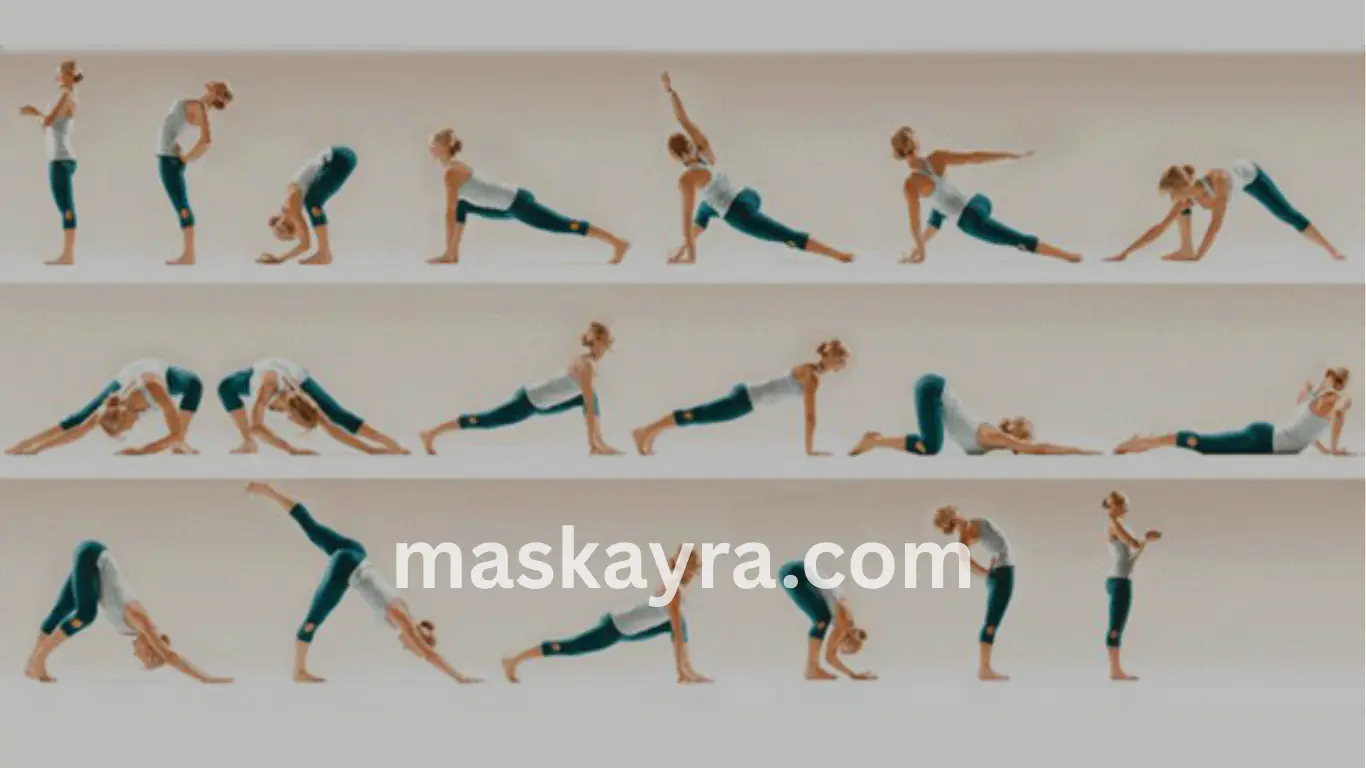
Anjali Mudra (Gesture of Greeting)
Place your feet hip-width apart, raise your arms to chest level, palms up, and join the little fingers of both hands in a mudra symbolizing the art of letting go and turning to your inner world.
Anahatasana – Backbend (Heart Opening Pose)
Take a deep breath, raise your arms to your sides, then, as you exhale, place them on your sacrum. As you inhale, begin to stretch your chest and abdomen upward, as if you want to fill your heart with lunar nectar.
Lunar Uttanasana (Moon Forward Bend)
Bend forward, relaxing your knees and neck. Rest your chest on your thighs, placing your palms on the floor, facing the sky. Release tension in your spine. Repeat this pose and the previous one three times, one after the other.
Ashwa Sanchalanasana – High Lunge (Equestrian Pose)
As you exhale, take a wide step with your right foot into a high lunge position, placing your front knee over your left ankle and pushing the heel of your back foot away from you.
Somahandrasana I (Moon Nectar, Flowing Vinyasa I), Parivrtta Parsvakonasana (variation)
As you inhale, raise your right arm up, turning your feet slightly clockwise, with your right foot perpendicular to the narrow edge of the mat and your left foot in a side plank.
Somahandrasana II, Parivrtta Parsvakonasana (variation)
As you exhale, extend your right arm alongside your body, trying to reach the foot of your back leg. Keep your chest open, shoulders level, and leg muscles toned. Repeat both variations two more times.
Transition to Sahaja Ardha Malasana
As you exhale, rotate your body counterclockwise so that your feet remain wide apart, parallel to each other.
Sahaja Ardha Malasana (Slow Spontaneous Half Squat)
As you inhale, bend your left knee and extend your right leg. Keep your spine in one straight line. As you exhale, feel the energy flowing down your inner legs to your pelvic floor. As you inhale, repeat on the other side. Continue this smooth transition two more times, allowing your arms and legs to move freely, as if they were seaweed.
Ashwa Sanchalanasana – High Lunge (Equestrian Pose)
Rotate your body toward your left leg and come into a high lunge.
Chaturanga Dandasana – Plank
Inhale and step your left leg back into a full-body position. Your hands should be directly under your shoulders, and your core muscles should be engaged. Feel a wave of energy travel from your crown to your tailbone and all the way to your heels.
Anahatasana – Backbend
As you exhale, lower your knees toward the floor, keeping your abdominal muscles engaged. Walk your hands forward along the floor, placing them shoulder-width apart, resting your chest on the floor between them. Take a few breaths in this pose, and then lower your body completely to a horizontal position.
Sahaja Bhujangasana (Spontaneous Flowing Cobra Pose), Bhujangasana (Variation)
Place your hands under your shoulders and begin to lift your chest, drawing your shoulders back and releasing your neck. Allow your spine to move smoothly without tension or strain.
Svananada (Happy Downward-Facing Dog Pose), Adho Muhva Svanasana (Variation)
As you exhale, smoothly move into Downward Facing Dog, bending your knees one at a time and lifting your heels up. Keep your spine, pelvic muscles, neck, and chin relaxed.
Three-Legged Downward-Facing Dog Pose, Adho Muhva Svanasana (variation)
Come into a standard downward-facing dog pose. Then, inhale and lift your right leg. Exhale and lower it to your left. Do the same with your left leg and step it forward into a high lunge.
Ashwa Sanchalanasana – High Lunge (Equestrian Pose)
As you lunge, inhale and begin to gently swing your hips from side to side, as if you were taking walking steps.
Lunar Utanasana (see 3)
Anahatasana standing (see 2)
Anjali mudra – Namaste
Before performing the chandra namaskar Yoga on the other side, hold this pose for a couple of seconds, analyzing the sensations inside you. Repeat the entire sequence of exercises on the other side, this time lunging with your left leg. In the final pose of Anjali Mudra, give thanks for the practice and dedicate its benefits to all sentient beings.
Last Update: March 23, 2026
#About Author#
 Written by Dr. Ashish Sharma, MBBS.MBBS graduate (Karaganda Medical University) and FMGE-qualified physician with completed internship at Rajeev Gandhi Government General Hospital, Alwar.
Disclaimer: This article is intended for general educational and awareness purposes only and does not constitute medical advice, diagnosis, or treatment. Please consult a qualified healthcare professional for medical concerns.