So much has probably been said about the benefits of yoga Exercises that it’s difficult to write anything new without repeating well-worn truths. However, as times, people, and the countries where yoga reaches change, so does yoga itself, and accordingly, so do the benefits one can derive from its practice.
It all begins with the very definition of yoga itself. Today, one can encounter a wide variety of interpretations of this word, and sometimes their meanings are so diverse and disparate that it’s difficult to believe they share a “single source.” “Practicing yoga” can take many forms, both in form and in essence, and the benefits of such Yoga practice can therefore manifest themselves in a wide variety of ways. Literally, the word “yoga” translated from Sanskrit means “unity,” “effort,” “striving,” “skillful practice,” and “connection.”
Essentially, it is a unified method for training the physical, mental, and intellectual components of a person, aimed at their comprehensive development. The spiritual component is viewed here not as something in opposition to the material, but rather as the development and realization of one’s original inner potential, which can be applied both in everyday life and in moments of creative creativity.
The benefits of yoga practice for any individual will be primarily determined by its meaning and the goals it pursues. Most often, the goals dictate the practice, and the practice dictates the benefits. The choice of both practice and its goals is always the result of each individual’s mind and consciousness. It’s what resonates within them, leading them to the same exercises or the same teacher each time.
As a person changes through their practice and achieves their goals, so too does the practice itself and the meaning it embodies. It often happens that a person comes to yoga solely to improve their health. However, as they progress along the path, they gradually become involved in working with their mind and their spiritual side.
Sometimes people initially choose yoga to simultaneously improve themselves at the level of body, mind, and spirit. Perhaps this is a memory from past lives, or perhaps intuition or a sixth sense—who knows? In any case, they say that if a person encounters yoga Exercises and self-improvement practices in this life, embarks on this path, and moves along it, then they undoubtedly already engaged in such practices and were on this path in a past life.
Yoga and health
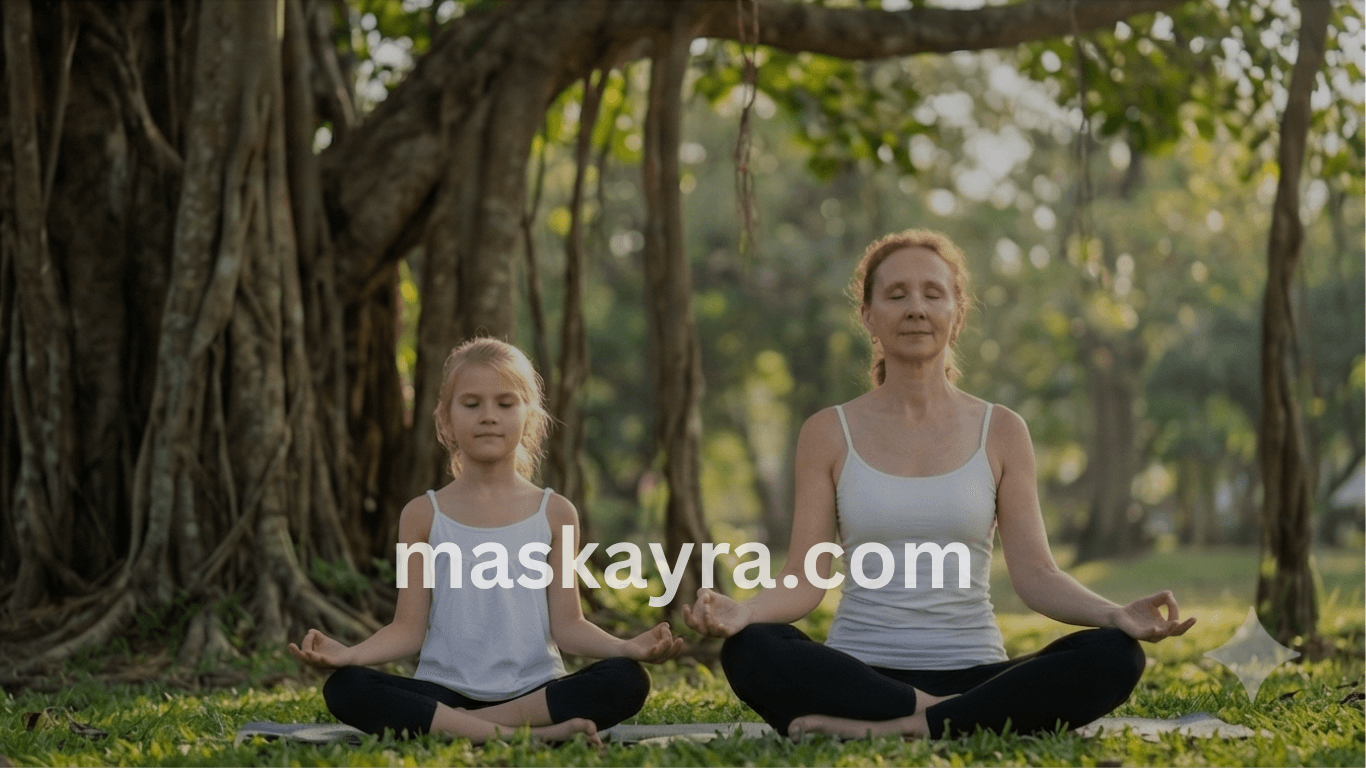
To more broadly understand the benefits of yoga for modern people, it’s worth considering it in the context of its relationship with the concept of “health”. Viewed broadly, yoga can be defined as a set of tools for working on the physical, mental, and spiritual aspects of a person, aimed at achieving an elevated state of mind and spirit, often used in Buddhist and Hindu practices in the East. According to the Constitution of the World Health Organization, “health is a state of complete physical, mental, and social well-being, and not merely the absence of disease or infirmity.”
In modern society, the word “health” is often perceived rather narrowly, as a quality of the body at that banal level of “no pain.” However, in reality, this concept encompasses a much broader meaning, including the absence of pain in the mind and soul, a state of harmony—the natural state of a living being in nature.
In fact, it turns out that yoga and health are practically synonymous, and the eight steps of the practitioner’s path are instructions for achieving and maintaining this state. After all, a person’s physical well-being directly depends on the state of the body, social well-being on the state of the mind, and spiritual well-being on the state of the spirit. Thus, yoga is a direct path leading to health in the broadest sense of the word.
The first two limbs of yoga—Yama and Niyama—form the foundation of a practitioner’s moral discipline. These principles help build healthy relationships both between oneself and the external world, and between oneself and one’s inner self. By adhering to the principles of Yama, one learns to abstain from what is harmful and useless, and through the principles of Niyama, one cultivates positive qualities. It is important to understand that the precepts of Yama and Niyama in no way limit one. Quite the contrary, by perceiving the world through the prism of these principles, one can see and comprehend its full diversity, depth, fullness, and perfection.
The next three limbs of yoga—asana (body posture), pranayama (breathing control), and pratyahara (withdrawal of the senses)—form the foundations of physical discipline. Through discipline, continuous practice, and a conscious attitude toward one’s body, one gains physical health and mental stability. It’s no wonder we’ve been familiar with the old saying since childhood: “A healthy mind resides in a healthy body—a great blessing!” A healthy body becomes the foundation for the next limbs of yoga—the development of a healthy mind.
Dharana (concentration), Dhyana (concentration of thought on an object), Samadhi (prolongation of concentration, which leads to the revelation of the essence) constitute the principles of discipline of the mind and spirit.
With the first stage, a person learns to gather their energy by renouncing unnecessary actions and behaviors; with the second, the ability to direct accumulated energy in a specific direction comes. The third, fourth, and fifth stages prepare the body and mind for proper functioning, which in turn is necessary for the full functioning of the brain.
The last three stages of the path described by Patanjali involve conscious work with a developed body and brain to observe the surrounding reality, become aware of it, and comprehend the laws of cause and effect. Following the path of the eight stages of yoga leads to the ability to see the essence of things, learn to perceive the world as it is, and dwell in this reality in a state of calm and joy, achieving the main goal of yoga—chitta vritti nirodha.
The impact of yoga asanas on the human physical body
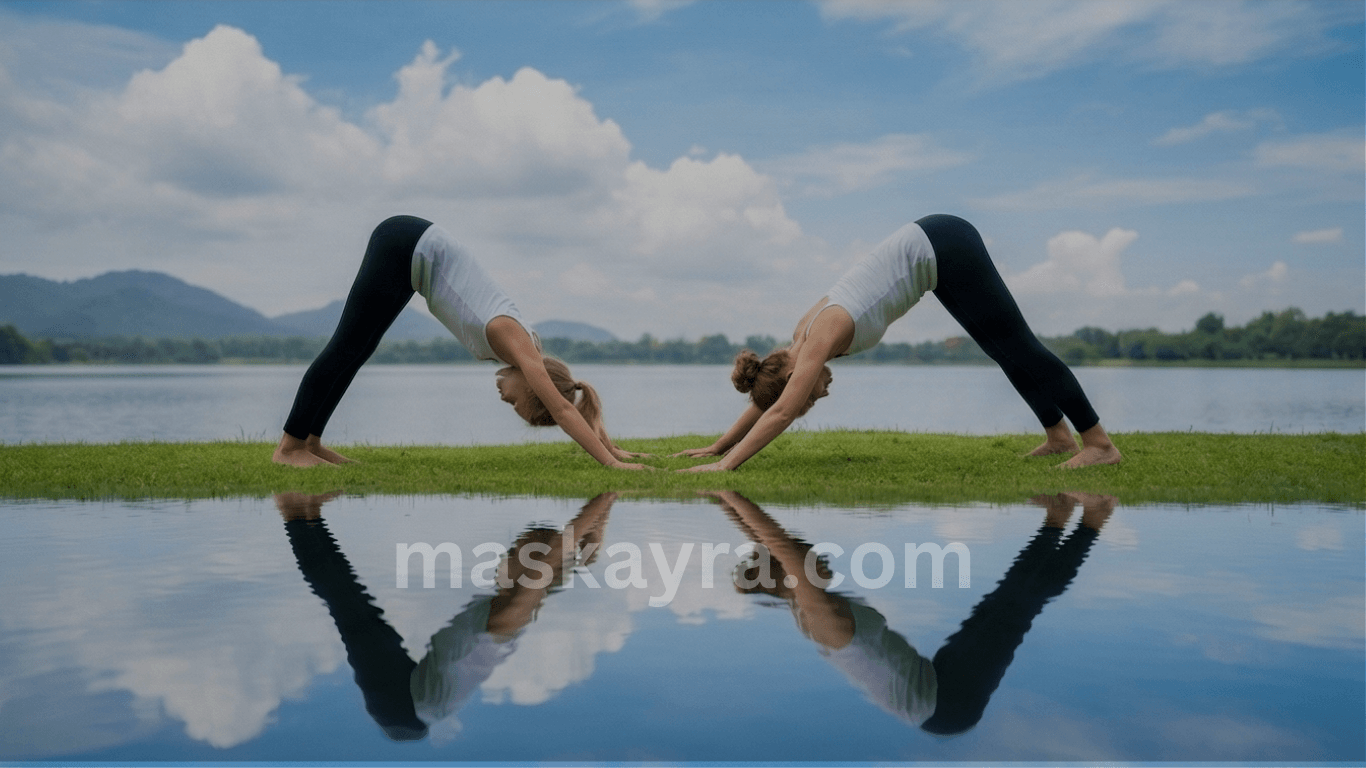
Yoga practice has a holistic effect on the physical body, influencing virtually all internal organ systems, from bone tissue to the nervous system. With the practice of yoga asanas, a person’s figure gradually changes, the body becomes toned, and muscles become firmer. Posture is improved, strength and flexibility are enhanced, as is overall well-being. With the introduction of yoga practice, a person gradually aligns their daily routine with the rhythm of nature. Very often, pronounced and confirmed “night owls” become equally pronounced “larks,” receiving an inexhaustible source of vitality from waking up early with the first rays of the sun. Dietary preferences can also often change with yoga.
As one becomes more familiar with one’s body, the ability to listen to and hear it develops—healthy and nutritious foods replace unhealthy foods, and alcohol and other unhealthy habits are abandoned. Moreover, all these changes occur voluntarily, naturally, with a deep understanding and awareness of one’s actions and deeds.
Now, in the 21st century, yoga has ceased to be something mystical, incomprehensible, and supernatural. This practice is no longer the activity of solitary seekers; today, the eight-limbed path of yoga is the path of many people on different sides of the planet, and its home is the entire Earth. Moreover, the most popular component of modern yoga is health, primarily the health of the physical body.
Since yoga began to gain popularity, especially in Western countries, a large number of studies and articles have appeared on the effects of regular asana practice on human health. And as the results of these studies show, yoga exercises are indeed very beneficial for physical health. For example, it has been discovered that yoga practice leads to a slowing of physiological processes in the body, resulting in a decrease in stress levels, heart rate, and blood pressure, as well as an improved immune system and the prevention of many diseases.
Dozens of experiments conducted in India, the United States, Japan, and Europe have found that yoga practice helps reduce risk factors for cardiovascular disease, high blood pressure, and elevated blood sugar, and significantly reduces the symptoms of atherosclerosis. Furthermore, yoga practice has been shown to be an excellent antioxidant, reducing oxidative stress by reducing the damage caused by highly reactive oxygen molecules that disrupt cellular function. Clinical studies have shown an interesting fact: patients who practice yoga tend to be hospitalized far less often or require medication, and there are virtually no cases of serious coronary events among them.
In 2011, doctors in Taiwan conducted an interesting experiment involving 36 participants: 18 of whom were yoga teachers with over 10 years of experience, and 18 of whom were regular individuals with no known health complaints. As part of the study, all of these participants underwent spinal scans, and their discs were carefully examined for damage. The results showed that the incidence of age-related degenerative changes in the spine was significantly lower in the yoga teachers. It’s also worth noting that yoga practice affects the nervous system. Breathing and meditation practices in yoga help reduce anxiety, making people less susceptible to anger, depression, and other unpleasant feelings.
Relaxation, breathing, and physical exercise are levers that help you learn to consciously control your body. This happens through the development of both external, physical flexibility and internal, mental flexibility. By constantly changing the “gas” and “brake,” alternating tension and relaxation, you learn to respond quickly, sharply, and most importantly, consciously and understandingly to changes in your environment. Thus, the “machine”—our body—is able to move more smoothly.
If we remember that our whole life is a continuous process of adaptation to constantly changing conditions and environment, then yoga in this case is truly an effective and very useful tool for this.
The impact of yoga practice on the mind and spiritual component of the personality
We’ve all noticed how someone listening or peering intently can be so absorbed in the process that they don’t notice mosquito bites, the buzzing of flies around them, or any other insignificant discomfort. This is one of those cases where they say “greater arousal absorbs lesser.” Or someone might draw while humming a melodic tune.
In this case, the singing acts as an auxiliary process, facilitating the drawing and concentration on the main action. It also happens that several centers of arousal simultaneously affect the brain, with equal intensity. This situation can cause a struggle “between these centers,” thereby causing overstimulation of the nervous system. It is precisely this understanding of how the nervous system works that is widely used by yoga practitioners to learn to control their body and mind.
Pratyahara, the fifth stage of yoga, consists primarily of learning to distract the senses and mind, as receivers, from any objects in order to free the nervous system from any “interference.” With Dharana—the ability to hold attention or thought on a specific object or to establish control over consciousness—one becomes capable of immersing oneself in a particular question, action, or process, ceasing to exist in any other facets of reality.
Maintaining a state of preoccupation with something, when the body, psyche, and mind are fully engaged in this process, is essentially Dharana. The continuation of this state over time, the ability to engage more deeply in the object of contemplation or reflection, flows into Dhyana (Meditation)—the seventh stage of yoga.
Regarding the eighth stage of yoga—Samadhi, and its benefits for the average person, this state is called “chitta vritti nirodha,” which arises after prolonged concentration. It is described as a new quality of consciousness, when a person gains the ability to see and understand the essence of things, their suchness and naturalness in this world. This state is often described as a kind of inspiration or illumination, the moment of “epiphany” experienced by a genius, poet, musician, or scientist.
This state of enlightenment can manifest itself in different ways; it is subjective and therefore experienced individually by different people, even by the same person at different times. Nevertheless, in any case, it is an opportunity for the most ordinary human mind to break through its own obscurations, free itself from delusions, and accept the world as it is, ceasing to view it through the prism of the ego, the false self. Thus, we can conclude that yoga is an excellent link between reality and the inner world, and through practice, one can create adequate, effective, and healthy connections between them.
By cultivating the necessary skills and qualities in one’s mind through practice, one can significantly influence the course of events in one’s life, forming a healthy and correct attitude toward them.
To put it simply, in my life, for example, this began to “work” and manifest itself through the rule: “If you remove emotion from any problem, it becomes a situation.” As I lived this phrase, reflected on it, and tried to incorporate it into my everyday life, I began to notice that this is indeed true. And very often, the solution to a situation is much simpler and easier than it seems. You just have to allow yourself to look at everything in a new way—not the way you always have, and thus gain new, as yet unknown, but certainly not predetermined experience.
Benefits of Yoga for Men and Women
In this article, I set out to explore, through subsections, the benefits of yoga for men and the benefits of yoga for women. I’ve been racking my brains for days trying to formulate these postulates, and I’m finally giving up. Today, I firmly believe that yoga is equally beneficial for both men and women, and that the gender distinction between the practice is more of a marketing ploy, a tribute to fashion—in short, something arbitrary. Yes, given the differences and characteristics of the male and female bodies, asana practice may differ for men and women.
Men often focus on strength-based exercises with an emphasis on developing endurance and muscle tone, while women’s classes are typically associated with gentle, calm practices, emphasizing flexibility and relaxation. Nevertheless, it’s worth remembering that the most valuable thing in both life and practice is the “golden mean.” Sometimes a strong and resilient man may need simple stretching and relaxation more than anything else, while a small, fragile woman may lack muscle strength and endurance.
On the other hand, in my opinion, yoga can give everyone, regardless of gender, age, or health, what their body, mind, and soul need at any given moment. But to truly experience and feel this benefit, one must open oneself to it, embrace it, and give inner consent to the practice. For each person, yoga will be beneficial and effective precisely to the extent that they allow this practice into their lives, their willingness to follow and trust it.
The system of self-improvement described in the Yoga Sutras by the sage Patanjali is a precious gift left by our ancestors for humanity for all time. However, this gift is available only to those who are ready to accept it and apply it in their lives. Yoga ignites the light of reason in a person’s life! In this light, a living reality is ignited before them, filled with faith in their own strength, a desire for knowledge and creativity, development and self-improvement.
The path of yoga typically becomes a lifelong journey, as it is impossible to become a true yogi without also becoming a bit of an artist, a bit of a scientist, a bit of a psychologist, a bit of a doctor, a bit of a historian, an athlete, and an economist. Over time, practice transforms a person into a well-rounded individual who lives their life adequately and knows how to improve themselves and the world around them.
There’s a saying: “Man is born for happiness, like a bird for flight.” Thus, through the union of body, mind, and soul, a new state is born, characterized by the acquisition of three fundamental human abilities:
- the ability to maintain stoic calm, rising above the flow of everyday life and making it possible not to lose self-control even in the most difficult situations;
- the ability to think quickly and intuitively, allowing one to comprehend the essence of the fundamental laws of nature;
- the ability to experience a special, unusual pleasure, before which all others pale.”
For me, the path of yoga, in some ways, echoes the journey of Joseph Knecht, the protagonist of Hermann Hesse’s novel The Glass Bead Game. It’s a description of the life and work of a true practitioner, a person who navigates life by acquiring knowledge, embracing the world, and learning to understand and embrace it. It’s a description of the journey of a person who, throughout his life, learned, explored the world, tirelessly discovering new facets of it, recognizing its perfection.
Last Update: March 26, 2026
#About Author#
 Written by Dr. Ashish Sharma, MBBS.MBBS graduate (Karaganda Medical University) and FMGE-qualified physician with completed internship at Rajeev Gandhi Government General Hospital, Alwar.
Disclaimer: This article is intended for general educational and awareness purposes only and does not constitute medical advice, diagnosis, or treatment. Please consult a qualified healthcare professional for medical concerns.