

Anyone can practice yoga and Asanas. It doesn’t matter whether they’re old or young, healthy or sick, thin or overweight, strong or weak, male or female—everyone can benefit from this ancient teaching. Only the lazy can’t practice yoga Exercise, as it requires patience, persistence, discipline, and regular practice.
It’s also important to understand that yoga exercises isn’t just about performing asanas. The spiritual aspects of this teaching bring just as much benefit to the practitioner’s life as physical exercises. Furthermore, the concept of perfection in asana practice is quite Unclear. What’s ideal for some may be primitive for others.
For a yoga novice (especially one who has never been physically active), any asana they perform will seem far from ideal. Don’t compare yourself to others: yoga is not a competition, but a purely spiritual practice that helps you achieve harmony with yourself. And if an asana‘s form appears perfect when performed by an instructor, an Indian guru, or a neighbor on the mat during class, this is the result of regular and long-term practice, not an indication that this person is a better yogi. Although, of course, certain body features can influence how an asana appears when performed by different people.
At the beginning of the yoga journey, anatomical nuances are generally unnoticeable. For an inflexible and weak person, a slight bend (arch, twist, etc.) is enough to engage all the muscles, ligaments, and joints they may not even have known existed. Incidentally, this can be a major advantage for beginners: with minimal movements, they can achieve results from practice that would require a great deal of contortion and sweat for an advanced yogi. In this case, limb length, excess weight, etc., have little impact on the form of the asana: after all, to fully master the Yoga poses, a beginner will still need to develop flexibility or strength.
It’s a different story with advanced practitioners. Even when all the muscles and ligaments are well-stretched and the joints are mobile, anatomical differences can easily cause an asana to be less than ideal. It’s worth noting that it’s much more important to engage the right muscles and target the appropriate organs in a yoga pose than to try to reach one part of the body to another.
Short arms are often the main problem for many intermediate and advanced yogis. These individuals have a much more difficult time mastering many asanas: dandasana, almost all arm balances, poses involving grasping the wrists of one hand with the other behind the back (all marichyasanas, pasasana), baddha padmasana, etc., as well as the backbounce in Ashtanga Viyasa Yoga.
Short arms make it more difficult to maintain viparita karani or sarvangasana (they have a smaller forearm support surface). Natarajasana and other asanas that require the arm to fully rotate at the shoulder joint to grasp the foot behind the back are also quite challenging for those with short arms. It’s worth noting that this disadvantage primarily affects the effectiveness of the pose, not its effect on the body.
While long-armed individuals may find the above-mentioned asanas easier, others will simply have to work harder and longer to master them. If you manage to lift yourself off the floor a little, performing a balance on your hands, or grab one hand with the other behind your back, then the asana can be considered mastered.
The second anatomical problem is clearly visible when performing Marichyasana. It’s important to understand that this is primarily a forward bend, which has a corresponding effect on the body. Whether the buttock of the bent leg is pressed to the floor is secondary. Most people have a shin longer than their femur, so they simply cannot press the sit bone of the bent leg firmly to the floor, no matter how hard they try. Much more important in this asana is to lengthen the back, bend at the hips, and keep the pelvis aligned.
Many long-legged people struggle with straight leg lifts from Adho Mukha Svanasana (Downward-Facing Dog). Doing this vinyasa cross-legged won’t detract from the practice. The key is to properly engage the bandhas and use the strength of the arms. Also, if your legs are very long, it can be difficult to grasp the wrists of one hand with the other behind your feet in Paschimotonasana and its variations, as well as other seated forward bends.
Some people can touch their toes with their noses in this pose, which is only possible because they have a fairly long body and not very long legs. When all the muscles and joints are properly engaged in Paschimotonasana, it will certainly be effective, even with your hands on your shins.
One could go on and on about the various body features that hinder the development of one’s practice. But it’s important to understand that yoga isn’t just about asanas. The spectacularity, beauty, and aesthetics of a pose have nothing to do with spiritual self-development, so don’t be discouraged if you can’t achieve the same asana form as someone depicted in a yoga book, video, or instructor.
The main thing is to practice regularly and feel the effects of yoga.
Last Update: January 15, 2026
#About Author#
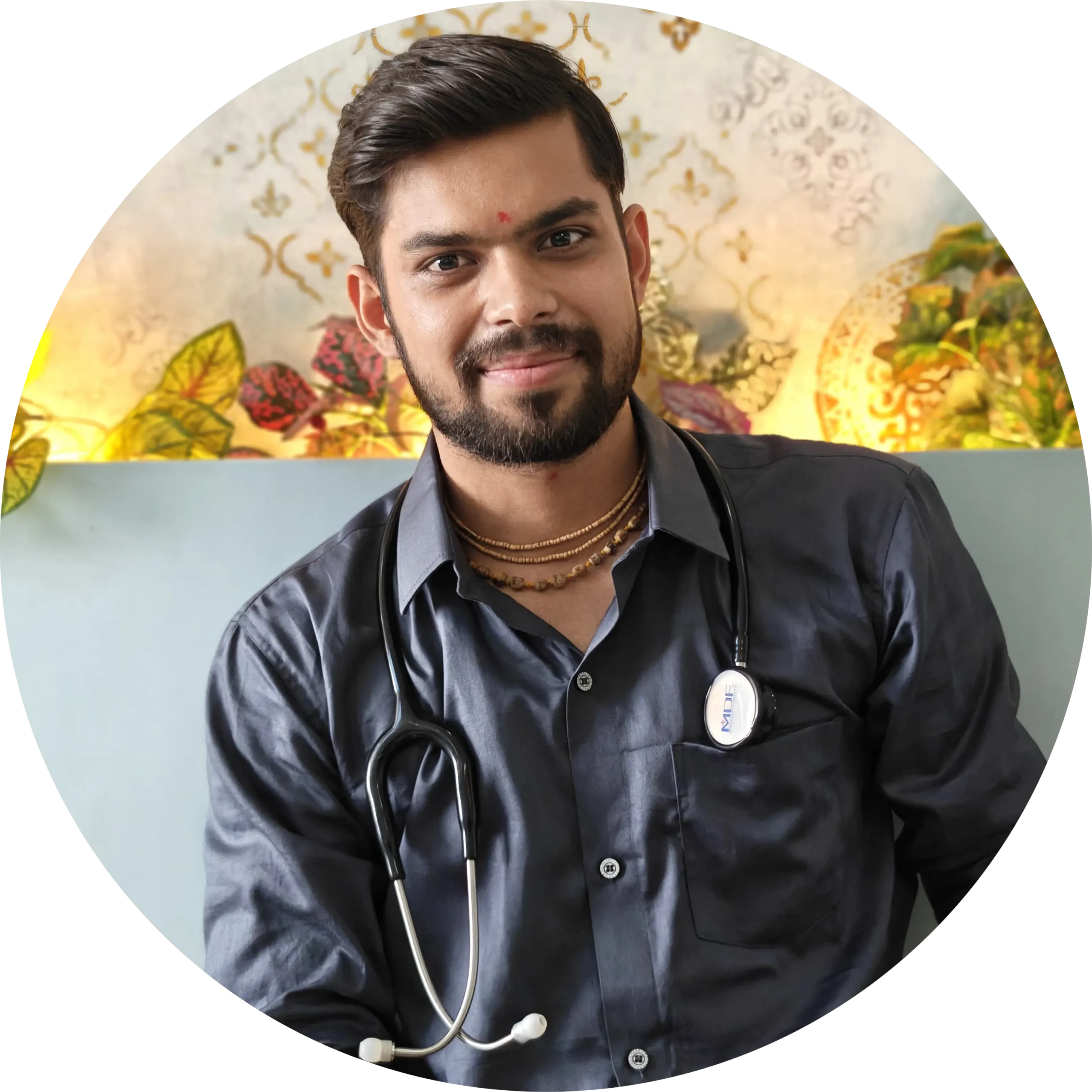 Written by Dr. Ashish Sharma, MBBS.MBBS graduate (Karaganda Medical University) and FMGE-qualified physician with completed internship at Rajeev Gandhi Government General Hospital, Alwar.
Disclaimer: This article is intended for general educational and awareness purposes only and does not constitute medical advice, diagnosis, or treatment. Please consult a qualified healthcare professional for medical concerns.